Overview
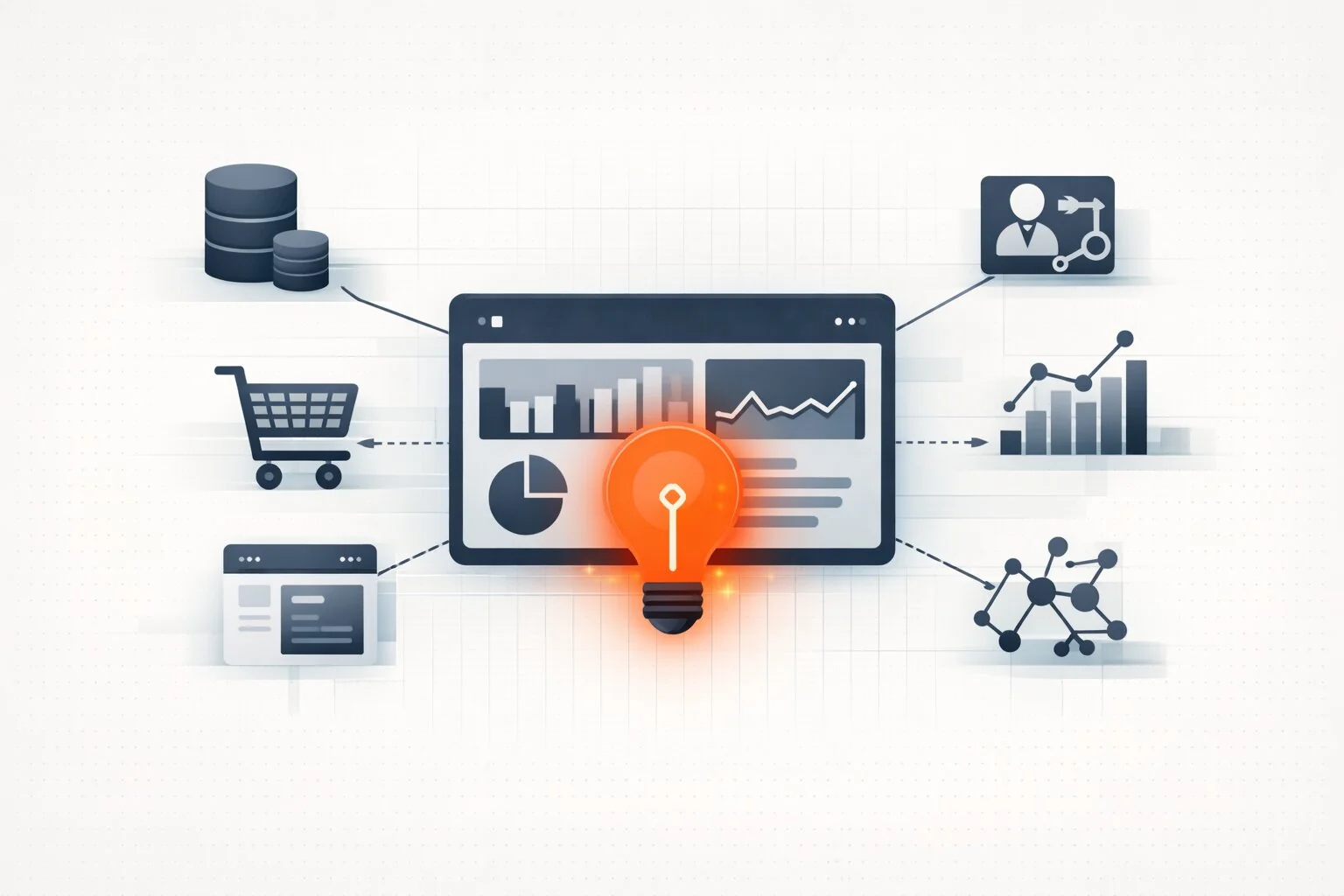
We built a business intelligence platform that pulls data from multiple systems into custom dashboards. A mid-sized retail company was running reports manually from their ERP, CRM, and marketing tools. Their analysts spent most of Monday and Tuesday cleaning spreadsheets just to answer questions from last week.
After launch, the finance team opens one dashboard every morning to see yesterday’s numbers. The sales director checks regional performance from her phone during store visits. Department heads build their own reports by dragging fields around, without waiting for the BI team. Weekly strategy meetings now start with live data instead of slide decks that were outdated before the meeting began.
Results
- Finance team went from 5 spreadsheets and 2 days of work to one dashboard they check each morning
- Sales director answers regional questions during store visits instead of waiting until she’s back at her desk
- BI analysts now spend time on forecasting instead of copying data between Excel files
- Department heads create their own monthly reports without submitting tickets to IT
- Monday morning exec meeting uses live dashboards, not PDFs from Friday afternoon
The Challenge
Companies collected data in separate systems that didn’t talk to each other. Each department kept their own reports in Excel. By the time someone compiled everything for a meeting, the information was already stale. Decision-makers asked simple questions like “How did last month compare to the same period last year?” and waited days for answers. This meant missed opportunities and reactive management instead of planning ahead.
Key Pain Points
- Data scattered across 10-15 different systems with no way to see the full picture
- Analysts spent 20-25 hours each week just extracting and cleaning data manually
- Reports took 3-5 days to deliver, so insights were outdated before anyone could act on them
- Only technical staff could write SQL queries, creating bottlenecks for simple questions
- Different departments used different formulas and definitions, leading to conflicting reports
- Executive dashboards were static PDFs emailed weekly, not reflections of current business
- Mobile access meant downloading Excel files on a phone, which nobody actually did
Our Solution
We built a business intelligence platform that connects to all their data sources and updates dashboards automatically.
Core Capabilities
- Automated data pulls: The system connects to ERP, CRM, and marketing platforms every hour, so dashboards always show recent information without manual exports
- Custom dashboards: Each department gets a starting dashboard that they can customize by dragging metrics around, no SQL required
- Drill-down views: Click any number to see the detail behind it, like which products drove a sales spike or which regions are underperforming
- Mobile access: Dashboards resize for phones and tablets, so executives can check metrics between meetings or while traveling
- Scheduled reports: Email summaries go out automatically every Monday morning, replacing the manual report process
System Architecture & Technical Approach
We built the system with three layers: data ingestion, storage, and visualization. Data comes in through scheduled jobs and API connections.
Architecture Highlights
- Data integration layer: Connects to databases and APIs using a mix of scheduled batch jobs and webhook triggers, handling both structured records and unstructured logs
- Data warehouse: Stores everything in a star schema that makes queries fast even when joining data from multiple sources
- In-memory cache: Frequently accessed metrics stay in Redis so dashboard pages load in under 2 seconds
- Access control: Role-based permissions mean sales sees sales data and finance sees finance data, with executives seeing everything
- Report builder: Drag-and-drop interface that generates SQL behind the scenes, so business users don’t need to learn database syntax
Business Impact
The platform went live department by department over three months. By the end of the rollout, reporting time dropped from about 25 hours to 5 hours per week for the analytics team.
Measurable Outcomes
- Reporting time went from 25 hours to 5 hours per week across the analytics team
- Report delivery dropped from 3-5 days to same-day or instant access via dashboards
- Self-service adoption reached about 60% of department heads within the first quarter
- Data-driven decision meetings increased from weekly to twice per week because data was always ready
- Manual data errors dropped significantly since the system pulls numbers directly from source systems
- Executive dashboard usage averaged 4 times per day, compared to once per week with old PDF reports
Why This Worked
This solution succeeded because it focused on real workflow problems, not just technology features.
- We talked to analysts and department heads before designing anything, so we knew where the actual bottlenecks were
- The drag-and-drop report builder meant non-technical users could answer their own questions without learning SQL
- We connected to existing systems instead of forcing people to enter data into a new tool
- Dashboards updated every hour, which was fresh enough to be useful but not so frequent that it overloaded source systems
- We launched with one department first and refined based on real feedback before rolling out company-wide
Tech Stack
- Backend: Python (Django) for APIs and data processing jobs
- Database: MySQL for application data, Amazon Redshift for data warehouse
- Cache: Redis for dashboard query results
- Frontend: React with TypeScript for dashboard UI, D3.js and Chart.js for visualizations
- Infrastructure: AWS (EC2, S3, Redshift), Apache Airflow for ETL orchestration
- DevOps/CI-CD: GitLab CI/CD for automated deployments
- Integration: Custom connectors to Salesforce, SAP, and Google Analytics APIs
Key Takeaway
This project showcases our expertise in:
- Build data integration pipelines that connect to multiple enterprise systems without disrupting existing workflows
- Design self-service analytics tools that non-technical users can actually use without training
- Architect scalable data warehouses that handle growing data volumes while keeping queries fast
- Deliver business value quickly by launching iteratively and improving based on real user feedback