Cloud Migration & Infrastructure Optimization

Logo
appstonelab
Cloud Migration & Infrastructure Optimization

Overview

We migrated a mid-sized technology company from legacy hosting to AWS cloud infrastructure. The migration included container orchestration for unlimited request handling, automated scaling, and improved security controls that their old setup couldn’t support.

After going live, their technical team stopped worrying about capacity limits. On Monday mornings, the CTO could see traffic patterns and costs in one dashboard instead of checking multiple servers. Friday deployments became routine because the new setup scaled automatically and handled traffic spikes without manual intervention.

Results

  • Request handling went from capped to unlimited
  • Traffic spikes no longer trigger nighttime pages
  • Centralized logs replaced scattered server file checks
  • Auto-scaling in minutes replaced weeks of waiting
  • Multiple weekly deployments replaced monthly maintenance windows

The Challenge

The company had been running on legacy hosting for 7 years with hard request limits. During product launches or peak seasons, their apps hit the request ceiling and started rejecting traffic. Scaling meant contacting their hosting provider and waiting days or weeks for approval and setup. When traffic spiked unexpectedly, customers saw error pages while developers scrambled to manually add capacity.

Security was another issue. Their hosting setup didn’t support modern encryption standards or network isolation. Compliance audits flagged these gaps, but the legacy infrastructure couldn’t implement the required controls without a complete rebuild. Logs were scattered across servers, making it impossible to trace security events or meet audit requirements.

Key Pain Points

  • Hard request limits rejected traffic during peaks
  • Scaling required days of waiting for provider approval
  • Traffic spikes required manual intervention and caused downtime
  • Security controls failed encryption and isolation compliance requirements
  • Scattered logs made security audits nearly impossible
  • Infrastructure changes required lengthy provider approval processes
  • No visibility into performance until customers complained

Our Solution

We migrated their workloads to AWS in phases while keeping everything running. We containerized their apps for unlimited request handling, set up orchestration for auto-scaling, and implemented security controls that met compliance requirements.

What We Delivered

  • Containerized Infrastructure – Moved apps to containers that add or remove instances based on traffic, removing the request limit from their old hosting
  • Orchestration Layer – Set up Kubernetes to manage containers automatically, scaling up during peak loads and down when quiet
  • Unlimited Request Handling – Traffic now routes through load balancers that distribute requests across multiple containers, handling any traffic volume
  • Security Hardening – Implemented network isolation, encrypted data at rest and in transit, and added centralized logging for compliance
  • Monitoring Dashboard – Gave the technical team visibility into performance, costs, and security events from one interface instead of scattered server logs

System Architecture & Technical Approach

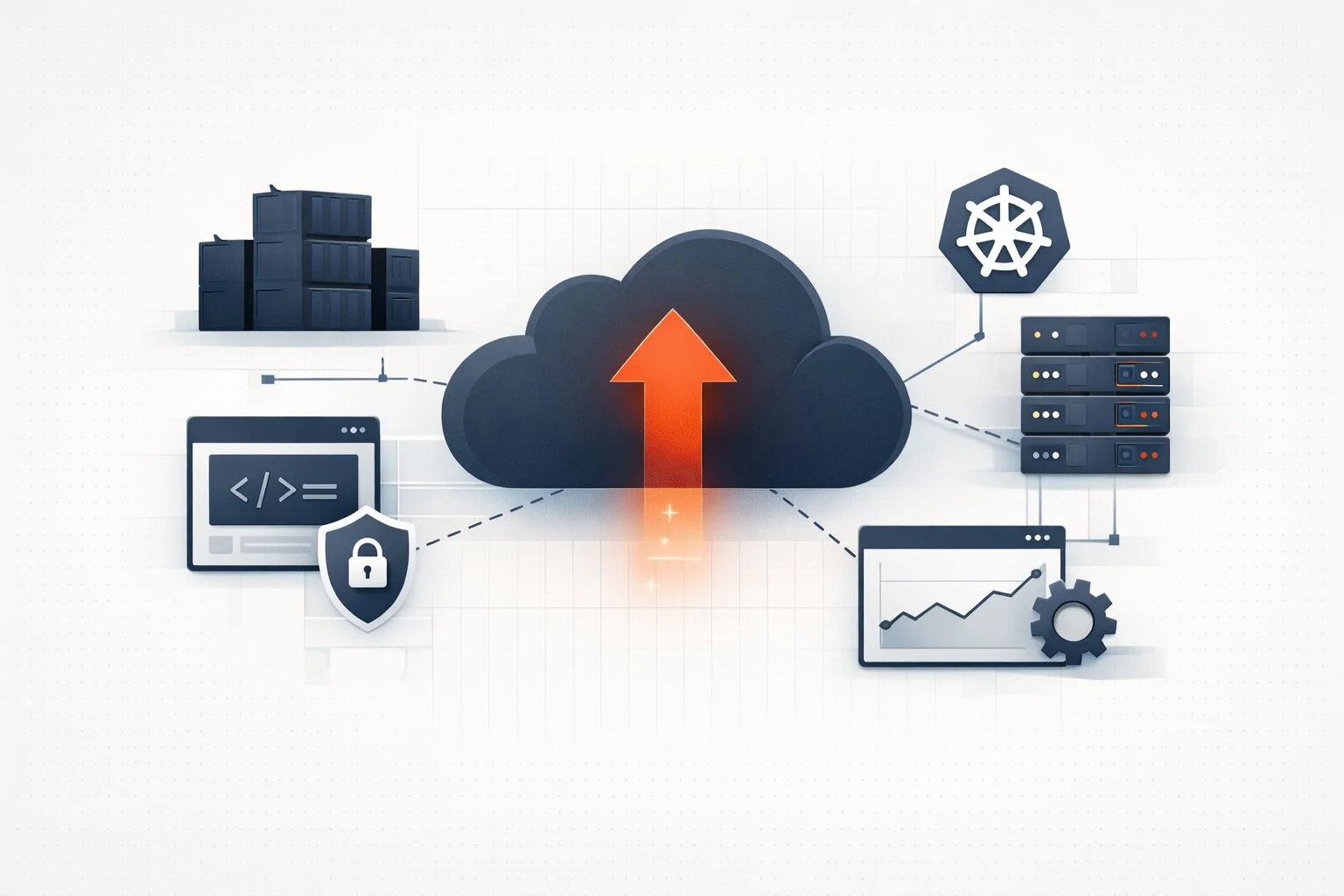
We architected their cloud infrastructure for unlimited scaling and security, using containers and orchestration to handle any request volume while keeping costs efficient.

Architecture Highlights

  • Container Infrastructure – Dockerized their applications so they run consistently and can scale horizontally without limits
  • Kubernetes Orchestration – Set up Kubernetes to manage container lifecycles, automatically adding instances when traffic increases and removing them when quiet
  • Load Balancing – Application Load Balancers distribute incoming requests across all available containers, eliminating bottlenecks from the old single-server setup
  • Security Layer – VPC network isolation, security groups for access control, encrypted storage, and SSL/TLS for all data in transit
  • Monitoring & Logging – Prometheus and Grafana track performance and costs, CloudWatch logs capture security events for compliance audits

Business Impact

The team saw results within the first month after migration. Developers no longer worried about request limits, and auto-scaling handled the next product launch without manual intervention or downtime.

Measurable Outcomes

  • Request handling went from hard limits to unlimited capacity through auto-scaling
  • Scaling time dropped from days of waiting to automatic within minutes
  • Security compliance gaps closed with encryption, network isolation, and centralized logging
  • Deployment frequency increased from monthly windows to multiple times per week
  • After-hours incidents decreased by roughly 60% due to auto-scaling
  • Infrastructure costs optimized through pay-per-use instead of fixed hosting contracts

Tech Stack

  • Backend: Python (migration scripts and automation tools)
  • Infrastructure: AWS (EC2, ECS, RDS, S3, CloudFront, Lambda), Terraform (infrastructure as code), Kubernetes (container orchestration)
  • DevOps/CI-CD: GitLab CI/CD, Ansible (configuration management)
  • Monitoring: Prometheus & Grafana (metrics and dashboards), ELK Stack (log aggregation)

Why This Worked

  • Containerization made apps portable and removed dependency on specific server configurations
  • Orchestration eliminated manual scaling and capacity planning that caused bottlenecks
  • Load balancing removed request limits that crashed their old hosting during peak traffic
  • Security improvements met compliance requirements their legacy setup couldn’t handle
  • Phased migration let them test each service before moving production traffic, reducing risk

Key Takeaway

This case study demonstrates our ability to:

  • Migrate legacy hosting to cloud without downtime or disrupting operations
  • Implement container orchestration that handles unlimited requests through auto-scaling
  • Design secure cloud architectures with network isolation, encryption, and compliance logging
  • Build scalable infrastructure that eliminates capacity limits and manual intervention
  • Deliver operational improvements, not just technology upgrades, changing how teams work daily
Hero Image

Ready to BuildYour Next Big Project?

Partner with our expert team for clear guidance, reliable solutions and faster, high quality delivery from idea to launch.

Get In Touch

Related Case Studies

View all

Enterprise Transport Tracking & Route Optimization

Real-time fleet tracking with smart routing, cut planning from 2h to 30m, boost on time deliveries to 82%, and manage trucks, costs, and routes in one platform.

Read case study

Use Case

Hospital Management System

Multi-location hospital system digitizing records, billing & bed tracking, cut check-in time, enable real-time data access, and ensure secure, compliant operations.

Read case study

Use Case

Business Intelligence & Analytics Platform

BI platform unifying ERP, CRM & marketing data, replace manual reports with real-time dashboards, cut reporting time 80%, and enable self-service insights.

Read case study

Use Case

API Management & Gateway Platform

Centralized API gateway platform with security & monitoring, reduce incidents, speed integrations, and boost developer productivity with unified API management.

Read case study

Use Case

AI Diagnosis Assistant for Healthcare Providers

AI diagnostic assistant for healthcare, deliver faster, accurate diagnoses, reduce errors, and provide real-time, specialist-level insights within clinical workflows.

Read case study

Use Case

Property Discovery Platform for International Markets

AI property discovery platform aggregating 40+ sources, cut research time 90%, boost match accuracy to 85%, and enable multilingual, data-driven real estate decisions.

Read case study


Use Case

AI Powered Lead Magnet Automation Platform

AI lead magnet platform, create personalized content in minutes, boost conversions, cut costs, and launch campaigns faster with automated, data-driven marketing workflows.

Read case study
Use Case